

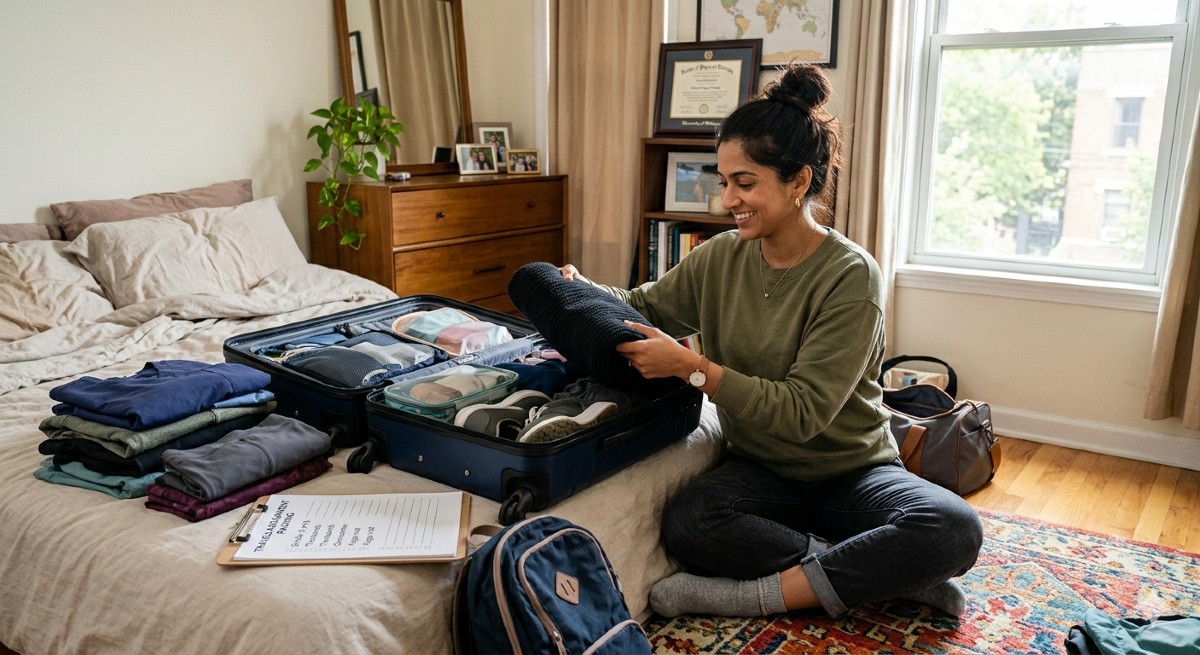
Starting a new travel assignment is exciting. It can also be a little overwhelming, especially when you are trying to figure out what to bring.
The good news is that most healthcare travelers rent furnished housing, which means you are not packing up your entire life. You are packing for a temporary, flexible lifestyle while maintaining your permanent tax home.
So what should you actually bring?
This guide breaks down exactly what to pack for a travel assignment, with practical tips to help you feel prepared, comfortable, and ready to focus on what matters most.
Start With the Essentials
Before anything else, make sure you have the items you absolutely cannot replace once you arrive.
Documents and Work Essentials
- Government-issued ID
- Professional licenses and certifications
- Copies of onboarding paperwork
- Health records and immunization documentation
- Any facility-specific requirements
Even if most of this is stored digitally, having backup copies can save you stress on your first day.
Clothing for Work and Life
- Scrubs or professional attire required by your facility
- Comfortable everyday clothing
- A light jacket or layers for varying temperatures
- Workout or outdoor gear if you plan to stay active
Think in terms of versatility. A smaller, flexible wardrobe works better than overpacking.
What NOT to Pack (Because Your Housing Is Furnished)
This is where many first-time travelers overpack.
Most travel assignments will find you in a furnished apartment or short-term rental, which typically includes:
- Bed and basic furniture
- Kitchen essentials
- Towels and linens
- Basic cookware
That means you can skip:
- Kitchen appliances
- Dishes and utensils
- Furniture or large home items
- Bulk household supplies
If you are unsure what is included, it is always okay to confirm before you arrive. But in most cases, less is more.
The Often-Forgotten Essentials
These are the items healthcare travelers usually wish they had packed.
Comfort Items
- Your favorite pillow or blanket
- Photos or small personal items
- A candle or diffuser (if allowed)
These small touches can make a new space feel like home much faster.
Tech and Daily Living
- Laptop or tablet
- Chargers and backup cables
- Headphones
- Power strip or extension cord
Furnished housing does not always have outlets where you want them.
Organization Basics
- Laundry bag or hamper
- Storage bins or packing cubes
- A small toolkit or basic supplies
Staying organized makes short-term living much easier.
Packing for a 13-Week Assignment
Most assignments run about 13 weeks, so your packing strategy should reflect that.
Build a Capsule Wardrobe
Choose items of clothing you can mix and match easily. Stick to neutral colors and a few versatile pieces.
Plan for Laundry
Instead of packing for weeks at a time, plan to do laundry regularly. This keeps your suitcase manageable.
Think About the Weather
Research your travel assignment location before you go:
- Is it colder than you are used to?
- Will you need rain gear or warmer layers?
- Are you heading somewhere humid or dry?
Packing for the wrong climate is one of the most common mistakes.
Special Considerations Most Guides Miss
Traveling With Pets
If you are bringing a pet:
- Confirm housing is pet-friendly
- Pack food, medications, and comfort items
- Bring copies of vaccination records
A familiar toy or bed can help your pet adjust to a new environment more quickly.
Staying Close to Home
Not every traveler relocates across the country.
Many allied health professionals take assignments within a few hours of home. If that is you:
- You can rotate items in and out between visits home
- You do not need to pack for every possible scenario
- You can keep bulkier or seasonal items at your permanent residence
This flexibility can make packing much simpler.
Pack vs. Ship vs. Buy There
You do not have to bring everything on day one.
A smarter approach:
- Pack the essentials you need immediately
- Ship items if you realize you need more later
- Buy locally for low-cost or bulky items
This keeps your initial move lighter and less stressful.
Role-Specific Packing Tips
While most packing advice applies across the board, here are a few role-specific considerations:
Physical Therapist (PT)
- Comfortable athletic wear
- Supportive shoes
- Small recovery tools if you have favorites
Occupational Therapist (OT)
- Lightweight therapy tools you use frequently
- A notebook or planner for session tracking
Speech-Language Pathologist (SLP)
- Portable materials or digital resources
- Headphones or audio tools for sessions
Imaging and Radiation Oncology Professionals
- Any specialty documentation or certifications
- Comfortable layers for varying clinical environments
Keep it minimal. You will have what you need at your facility, so focus on personal preferences rather than full setups.
How to Make Your Assignment Feel Like Home
Even though your stay is temporary, your comfort matters.
A few small additions can go a long way:
- A favorite coffee mug
- Books or hobby items
- Your usual morning or evening routine essentials
The goal is not to recreate your entire home. It is to create a space where you can relax and recharge.
Final Checklist: What to Pack for a Travel Assignment
Here is a simple checklist to keep things organized:
Essentials
- ID, licenses, and documents
- Work attire
- Everyday clothing
Living Basics
- Toiletries
- Laundry supplies
- Tech and chargers
Comfort Items
- Pillow or blanket
- Personal touches
Extras
- Weather-appropriate gear
- Pet supplies (if applicable)
- Organization tools
Final Thoughts
Packing for your upcoming travel assignment does not have to be complicated.
You are not moving permanently. You are stepping into a flexible, short-term experience designed to support both your career and your lifestyle.
Start with the essentials, keep things simple, and adjust as you go. Most healthcare travelers quickly find a system that works for them, and it gets easier with every assignment.
If you are looking to get started on your first or next healthcare travel assignment, Preferred can help! Apply now to get connected with a recruiter and find an opportunity that fits your career and lifestyle goals.